
Trigger finger and thumb: catching, clicking or locking
Published by My Therapist Group · Updated
Wrist and hand pain · Frankston
A finger that catches when you release a cup or a thumb that sticks in the morning can make everyday tasks awkward. Trigger finger or thumb is one possible explanation. Ash can assess your hand function, discuss practical ways to reduce aggravation and explain when a GP or hand specialist should be involved.
When a finger catches or locks
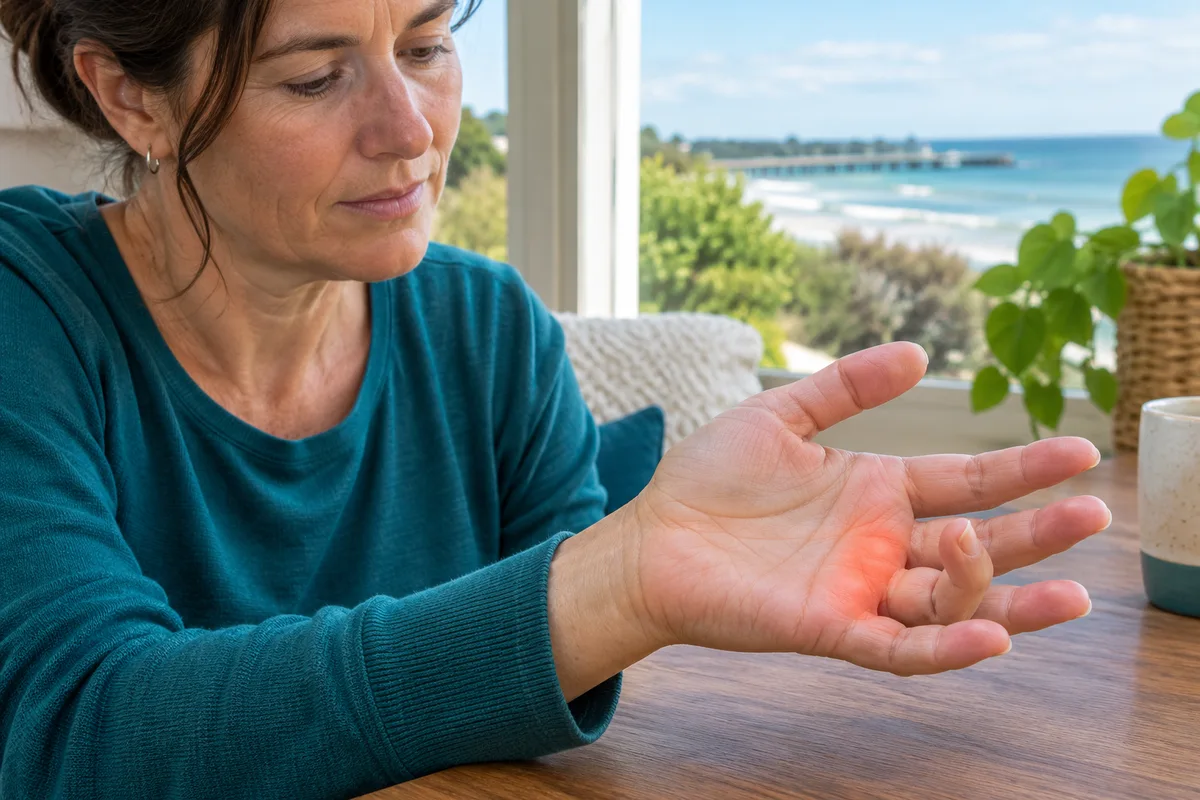
Triggering occurs when a flexor tendon does not glide smoothly through its retaining tunnel in the palm. The finger or thumb may click, catch or remain bent, sometimes with tenderness near its base. Symptoms may be worse after rest or repeated gripping. A joint injury, arthritis or another tendon condition can look similar, and an examination is important if the pattern is unclear.
Assessing hand movement and function
Your appointment considers how often the digit catches, whether it releases easily and the effect on work, hobbies and personal care. Ash may assess comfortable finger movement, local tenderness and relevant hand tasks. Mention diabetes, inflammatory arthritis, previous injury and any recent injection or operation. If the digit is persistently locked or function is substantially affected, medical or specialist hand review may be the more useful next step.
Reducing aggravation and finding suitable care
- Modify repeated gripping. Temporarily change the amount or intensity of tasks that repeatedly trigger catching. Different handles or sharing tasks can reduce forceful hand use.
- Maintain suitable comfortable movement. Selected movement advice or an appropriate splint may be considered. Do not repeatedly force the finger through a painful catch to test whether it has improved.
- Review persistent locking. Monitor useful hand function and arrange further care if symptoms continue. Injections or surgery are medical options for some people and are not replaced by exercise advice.
Common questions
Is a clicking finger always trigger finger?
No. Clicking can arise from a joint, tendon or previous injury. The position of tenderness and the catching pattern help guide assessment.
Should I keep pulling it straight?
Repeated forceful straightening can be uncomfortable and is not a treatment plan. Seek assessment if it regularly locks or is difficult to release.
Will I need an operation?
Not everyone does. The treatment choice depends on severity and persistence, and may include activity changes, splinting or medical treatments. A GP or hand specialist can discuss the options.
Related care and advice
Clinical references and further reading
General information, not a diagnosis or an individual treatment plan. Your assessment guides advice for your symptoms and goals.
Care with Ash
What to expect at your appointment
Start with what’s been happening and what you want to get back to. Ash will discuss your symptoms, assess relevant movement and explain suitable next steps. Treatment and exercises depend on your assessment and preferences.
Fees, what to bring and your first visit ↗