
Musculoskeletal pelvic pain physio Frankston
What this physiotherapy service covers
Lower-back and sacroiliac joint (SIJ) concerns are a key focus of Ash’s practice. The SIJs connect the base of the spine to the pelvis. Ash assesses musculoskeletal pain and movement concerns around the pelvis, lower back, hips and buttocks, including symptoms described as SIJ dysfunction. These may affect sitting, walking, bending, running, cycling or other everyday activities.
If your symptoms involve bladder, bowel, reproductive or other pelvic-health concerns, a GP or suitably qualified pelvic-health practitioner is the appropriate starting point.
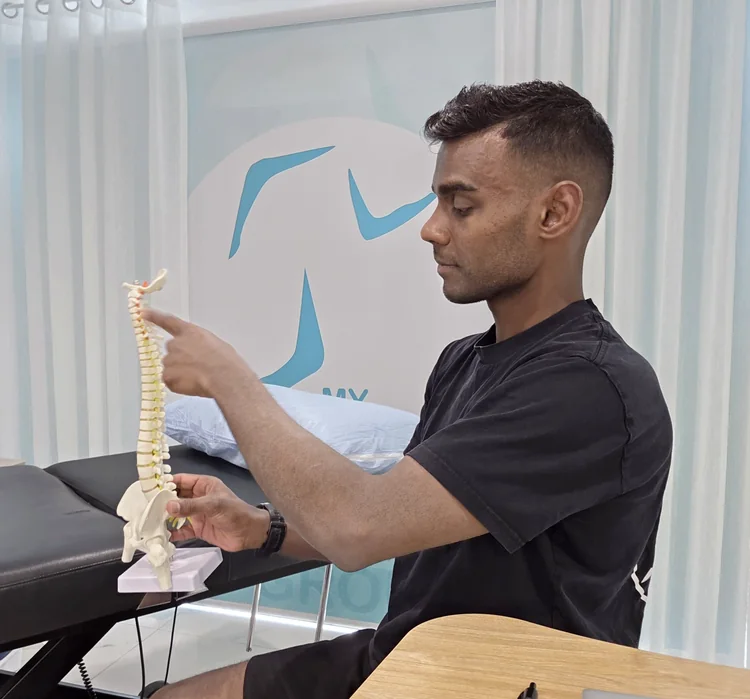
Could musculoskeletal physiotherapy help?
Physiotherapy may be appropriate when pelvic-region symptoms are linked with movement, loading, a musculoskeletal injury or interaction with the lower back and hips. Ash will ask what aggravates or eases the problem and how it changes through the day and night. Assessment may include walking, movement, strength and load tolerance, together with a hands-on assessment of stiffness and sensitivity when appropriate.
A plan based on your movement goals
Where physiotherapy is appropriate, your plan may include hands-on treatment, targeted exercise, graded strengthening, movement retraining, education and practical changes for sitting, work or sport. Ash has a particular interest in running and cycling mechanics and can consider these activities when relevant to your symptoms.
Care with Ash
What to expect at your appointment
Start with what’s been happening and what you want to get back to. Ash will discuss your symptoms, assess relevant movement and explain suitable next steps. Treatment and exercises depend on your assessment and preferences.
Fees, what to bring and your first visit ↗