
Shoulder pain physio Frankston
Find information for your shoulder concern
Shoulder weakness and shoulder stiffness can call for different approaches to rehabilitation. Ash assesses movement, strength and the activities affected before explaining a plan suited to your symptoms.
- Rotator cuff-related pain: information about shoulder loading, strength and rehabilitation.
- Frozen shoulder: information about substantial stiffness, symptom management and gradual movement.
- Swimmer’s shoulder: information about swimming demands and returning to the pool.
What your shoulder assessment may include
Shoulder symptoms can arise from several structures and may also be influenced by the neck, upper back, training load or the way the shoulder blade and arm work together. Common presentations include rotator-cuff-related pain, stiffness or frozen shoulder, strains, joint irritation and pain following a change in activity.
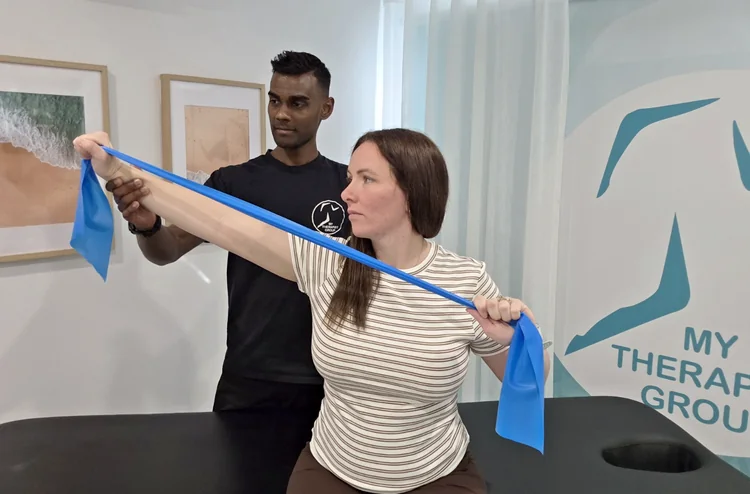
Ash will discuss how the problem started, what movements aggravate it and what you need to return to. Assessment may include shoulder and neck movement, strength, load tolerance and relevant work or sporting tasks. If a medical review or scan would help, Ash will explain the next step.
Common questions about shoulder pain
When should I see a physiotherapist for shoulder pain?
Consider an assessment if pain is affecting sleep, reaching, lifting, work, gym or sport, if it is not settling, or if you are unsure how much activity is safe.
Do I need a scan before physiotherapy?
Usually not. Ash will assess your shoulder first and explain whether imaging or medical review would add useful information.
Can physiotherapy help shoulder pain during swimming?
Assessment can consider shoulder strength, mobility, fatigue and training load. Swimmers can also use the dedicated swimmer’s shoulder service.
Related shoulder guides: Rotator cuff pain · Frozen shoulder · Swimmer’s shoulder
Related service: Swimmer’s shoulder physiotherapy in Frankston
Related physiotherapy information
Care with Ash
What to expect at your appointment
Start with what’s been happening and what you want to get back to. Ash will discuss your symptoms, assess relevant movement and explain suitable next steps. Treatment and exercises depend on your assessment and preferences.
Fees, what to bring and your first visit ↗