Running injury & running mechanics physio Frankston
Physiotherapy for runners
Ash has personal interests in triathlon and running mechanics. This is physiotherapy for running-related pain and movement.
At the Frankston clinic, Ash’s assessment starts with you as a runner: the running you enjoy, the symptoms limiting it, how your training has changed and how you recover. The aim is a practical plan for returning to the distances and sessions that matter to you.
Related information: Sports & endurance physiotherapy · Returning to running after pain or injury

Running problems Ash can assess
Running-related pain may involve the knee, shin, calf or Achilles tendon, ankle, foot, hip, lower back or pelvis. Symptoms can follow a sudden change in distance, speed, hills, footwear, terrain or recovery, but often more than one factor is involved.
Ash will consider how the trunk, hip, knee, ankle and foot work together during relevant tasks. Any movement advice is matched to your symptoms, physical findings and running goals.
Running analysis as part of physiotherapy
The clinic treadmill lets Ash look at your running style and technique, when running is appropriate for your symptoms. He’ll consider this alongside your movement, strength and training history to work out what may be worth changing.
The findings guide your wider treatment and rehabilitation plan, including exercises, training adjustments and a gradual return to running.
Let us know when booking if you’d like running analysis included in your appointment.
Training load comes first
For running injuries, Ash places particular emphasis on load management: how much running you do, how hard your sessions are and the recovery between them. He will ask about recent changes in distance, pace, hills and frequency, and how symptoms behave during a run and afterwards. This helps him understand why the problem may have developed and what needs adjusting now.
Strength and movement as you recover
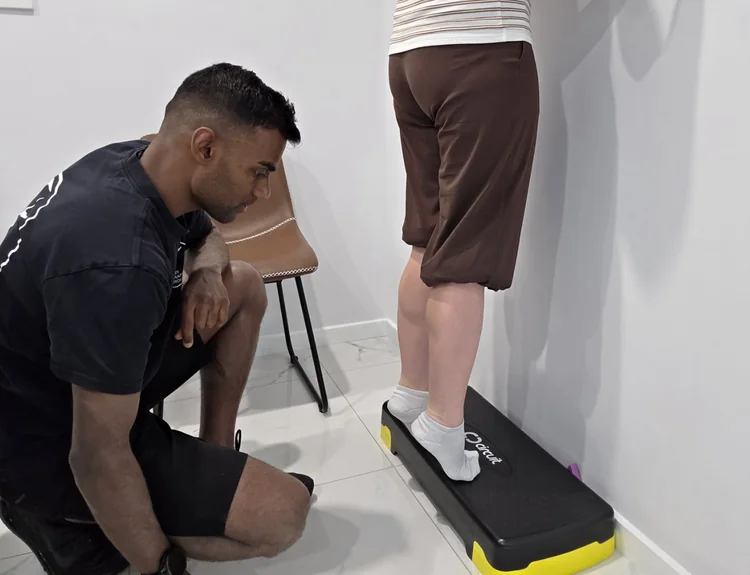
Your physical assessment may include strength, movement and tolerance of relevant tasks. These findings help identify areas to work on alongside training changes. As the injury settles, rehabilitation can progress to strengthening the areas that need it and working on movement patterns relevant to your running.
Treatment and your next steps
Treatment may include hands-on physiotherapy, targeted exercise and dry needling when appropriate and with your consent. You will leave with a clear plan for activity and exercises, when to review progress, and how to work towards your running goals. Ash will discuss further investigation or referral if the assessment indicates it.
Related running concerns
- Achilles tendon pain and return to running
- Calf pain and muscle symptoms
- Pain around the kneecap
- Advice on returning to running after pain or injury
Running physio FAQs
Can I have running analysis during my appointment?
Yes. Ash can use the clinic treadmill to assess your running style as part of a physiotherapy appointment, where appropriate for your symptoms. This contributes to your treatment and rehabilitation plan. Please mention it when booking.Do I need to stop running? Not always. Advice depends on your symptoms, examination findings and training goals.
What should I bring? Bring the running shoes you use and wear clothing you can move comfortably in.