
Patellar tendinopathy / jumper’s knee
Pain just below the kneecap during jumping, running or loaded squats may involve the patellar tendon. Often called jumper’s knee, patellar tendinopathy can affect recreational exercisers as well as athletes. Ash can assess your knee and help you find a starting point for rehabilitation.
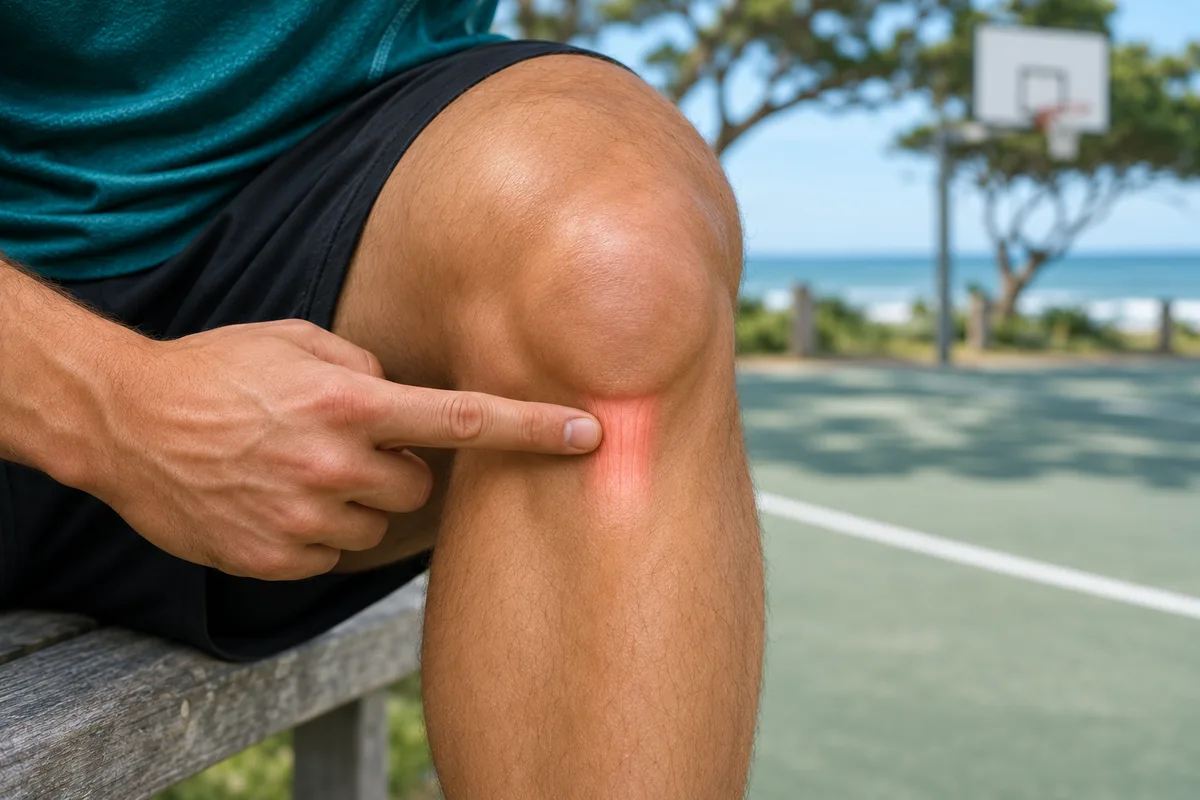
Where is patellar tendon pain felt?
The pain is usually localised near the tendon between the kneecap and shin. Jumping, landing and faster running may make it more noticeable, and stiffness can occur. A change in training load can be relevant. It is different from patellofemoral pain, which often feels more spread around or behind the kneecap, although symptoms can overlap.
How will Ash assess it?
At the clinic, Ash will ask about your sport, gym routine and recent changes in sessions or intensity. He may check the painful area, knee movement and leg strength, then assess relevant loading tasks when suitable. You can explain which part of training is hardest to modify. Findings guide the plan and whether further medical assessment is needed.
What can rehabilitation involve?
- Manage the load that flares symptoms. Temporarily adjust jumping, sprinting or squat depth if these reliably aggravate the tendon. Keep suitable activity in the plan where possible.
- Progress strengthening. Begin with an exercise load matched to your assessment and build gradually. Other leg muscles may also need attention.
- Reintroduce faster demands. Progress towards jumping, landing, running or sport-specific work. A quieter knee during everyday walking is not the only requirement for returning to high-load training.
Common questions
Is this the same as runner’s knee?
Not necessarily. People use that phrase for several knee problems. The location of pain and response to assessment help distinguish them.
Should I stop all exercise?
Complete rest is not usually the long-term plan. Discuss ways to reduce aggravating loads while maintaining activities you can tolerate.
How quickly can I return to jumping?
There is no fixed date for everyone. Strength, symptoms and your response to progressively harder tasks help guide the decision.
When to seek medical care
A sudden injury with a pop, major swelling or inability to actively straighten the knee needs urgent medical assessment. A hot swollen knee with fever also needs prompt medical care.
Related care and advice
Clinical references and further reading
This page provides general information. Your assessment guides advice for your own symptoms and goals.
Care with Ash
What to expect at your appointment
Start with what’s been happening and what you want to get back to. Ash will discuss your symptoms, assess relevant movement and explain suitable next steps. Treatment and exercises depend on your assessment and preferences.
Fees, what to bring and your first visit ↗