Achilles tendon pain and return to running
Understanding achilles tendon symptoms
Achilles tendon symptoms can affect push-off, stairs and the return to running. This page focuses on tendon loading and rehabilitation. For muscle-related lower-leg symptoms, see calf pain physiotherapy.
What your calf and achilles assessment may include
Calf and lower-leg symptoms can arise from the calf muscles, Achilles tendon, ankle or foot, nerves, or pain referred from the lower back. Assessment helps identify the most relevant contributors rather than relying on the location of pain alone.
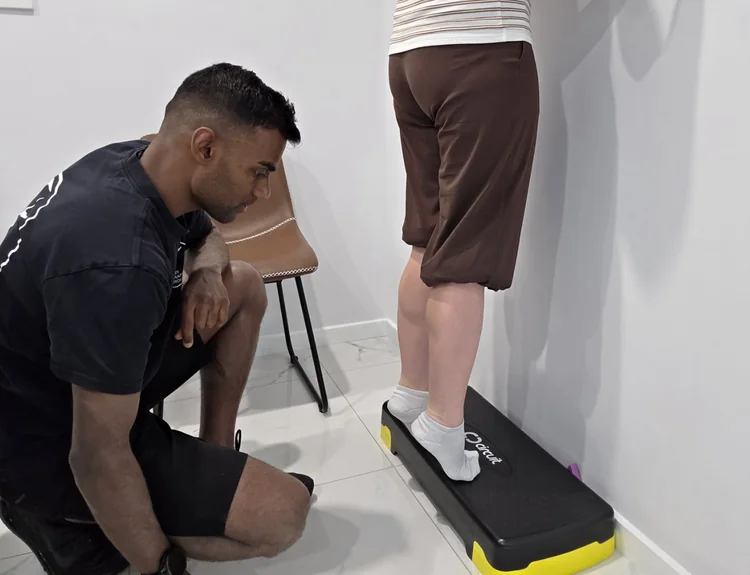
Ash will discuss how the symptoms began, recent changes in running, sport or work load, recovery, footwear and the activities that are limited. Assessment may include walking or running, ankle and lower-limb movement, calf strength and endurance, balance, hopping and other tasks relevant to your goals.
Common questions about calf and achilles pain
When should I see a physiotherapist?
Consider an assessment if pain or stiffness is affecting walking, stairs, work, gym, running or sport, if it is not settling, or if you are unsure how much activity is appropriate.
Is achilles pain always caused by inflammation?
Not necessarily. Achilles symptoms may reflect how the tendon is responding to load, alongside strength, recovery and recent activity changes. Ash will assess the pattern and explain the findings.
Can I keep running with calf or achilles pain?
That depends on the severity, the likely tissue involved and how symptoms respond during and after activity. A plan may temporarily adjust distance, speed, hills or frequency before building these demands again.
Do I need a scan?
Often not. Clinical assessment is commonly the first step. Ash will explain if medical review or imaging may add useful information.
Treatment and return to running or sport
Ash will build your plan around the assessment, what you can manage now and what you’d like to get back to. It may include clear advice, temporary changes to aggravating loads, graded calf and Achilles strengthening, ankle mobility or balance work, and a progressive return to walking, work, gym, running or sport. Hands-on physiotherapy or dry needling may be considered where appropriate, but these are not used as substitutes for active rehabilitation.
Recovery time varies. Ash will review your progress and help you work out the next step.