Rotator cuff physio Frankston
Rotator cuff problems can develop suddenly or gradually
The rotator cuff is a group of muscles and tendons that helps control the shoulder. Symptoms may follow a fall or lifting injury, or build with repeated work, swimming, throwing, gym training or age-related tendon change. Pain with reaching or lying on the shoulder, reduced strength and difficulty raising the arm are common—but similar symptoms can have other causes.
What your assessment may include
Ash will discuss how the problem began and how it affects sleep, dressing, lifting, work and the activities you want to return to. Assessment may include shoulder and neck movement, rotator cuff strength, control and task-specific testing. If imaging or medical review may help guide care, Ash will explain why.
Progressive rehabilitation for your shoulder
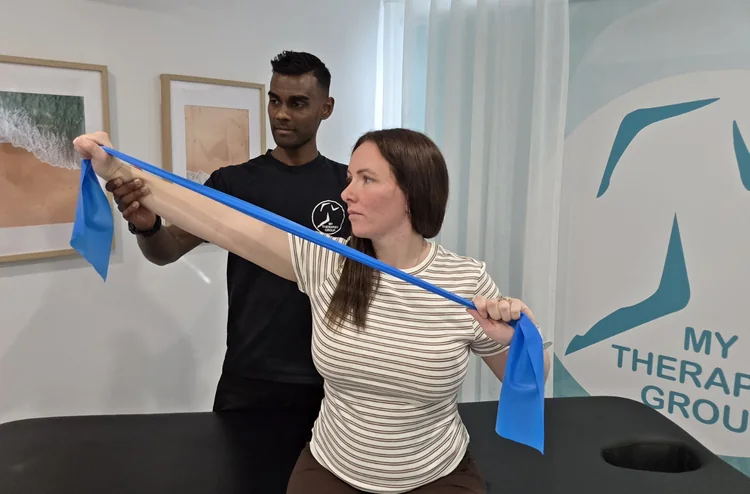
Your plan may include activity and load advice, comfortable mobility work, progressive rotator cuff and shoulder-blade strengthening and a graded return to lifting, work, gym, swimming or other sport. Hands-on physiotherapy or dry needling may be considered as supporting treatments when suitable for you and with your consent. Ash will adjust treatment as your shoulder responds. Recovery time varies from person to person.
Rotator cuff FAQs
Does every rotator cuff tear need surgery? No. Management depends on how the injury occurred, the degree of weakness, your health and your goals. Referral can be arranged when appropriate.
Do I need a scan before physiotherapy? Not always. Assessment helps determine whether imaging is likely to change management.
Related care
Swimmer’s shoulder physiotherapy
Sports and endurance physiotherapy