
Frozen shoulder physio Frankston
Frozen shoulder changes over time
Frozen shoulder, also called adhesive capsulitis, involves pain and progressive stiffness of the shoulder joint. It often develops gradually and can move through painful, stiff and recovery phases, although the timing and experience differ between people. Similar symptoms can also come from rotator cuff problems, arthritis, injury or pain referred from the neck, so assessment is important.
Frozen shoulder is more common after age 40 and in people with diabetes, and it can also follow injury, surgery or a period when the arm has not been moving normally. Sometimes there is no clear trigger.
What your assessment may include
Ash will discuss how the symptoms developed, your health history and how the shoulder affects sleep, dressing, work, exercise and daily life. Assessment may include active and assisted shoulder movement, strength, neck screening and functional tasks. If a GP review, imaging or another opinion may be appropriate, Ash will explain why.
Treatment matched to the stage of your shoulder
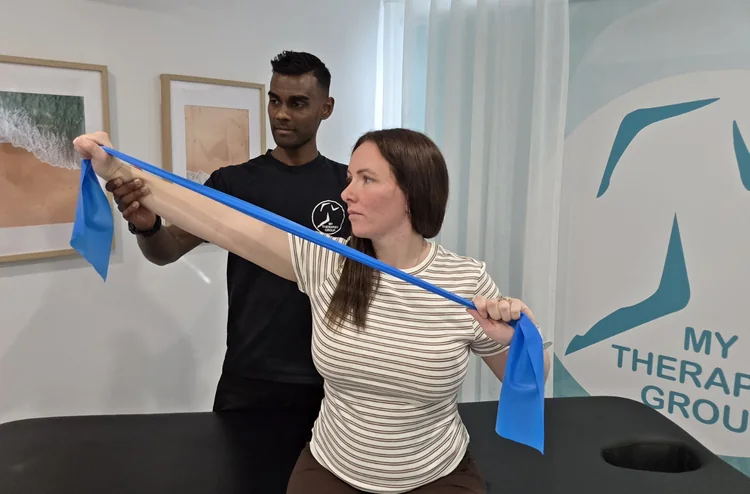
Your plan may include advice on sleeping and daily positions, pain-limited movement, gentle mobility work and gradual strengthening as the shoulder becomes more tolerant. Hands-on physiotherapy or dry needling may be considered as supporting treatments when suitable for you and with your consent. Ash can also recommend GP review to discuss pain relief or injection options when appropriate. Frozen shoulder can be slow to change. Ash will keep checking what’s helping and what needs adjusting.
Frozen shoulder FAQs
How is frozen shoulder different from a rotator cuff problem? Frozen shoulder usually causes marked restriction in several directions, while rotator cuff problems more often centre on pain or weakness. Examination helps distinguish the pattern.
How long does frozen shoulder last? It varies and can persist for many months or longer. Treatment focuses on managing pain and maintaining or restoring useful movement over time.
Do I need a scan? Not always. Frozen shoulder is often identified through the history and examination, with imaging considered when another condition is suspected.