
De Quervain’s tenosynovitis and thumb-side wrist pain
Published by My Therapist Group · Updated
Wrist and hand pain · Frankston
Picking up a bag, lifting a child or turning a key can become surprisingly uncomfortable when the thumb side of the wrist is sore. De Quervain’s tenosynovitis is one possible cause. Ash can assess your symptoms, discuss the tasks you need to keep doing and help you find suitable activity changes or further care.
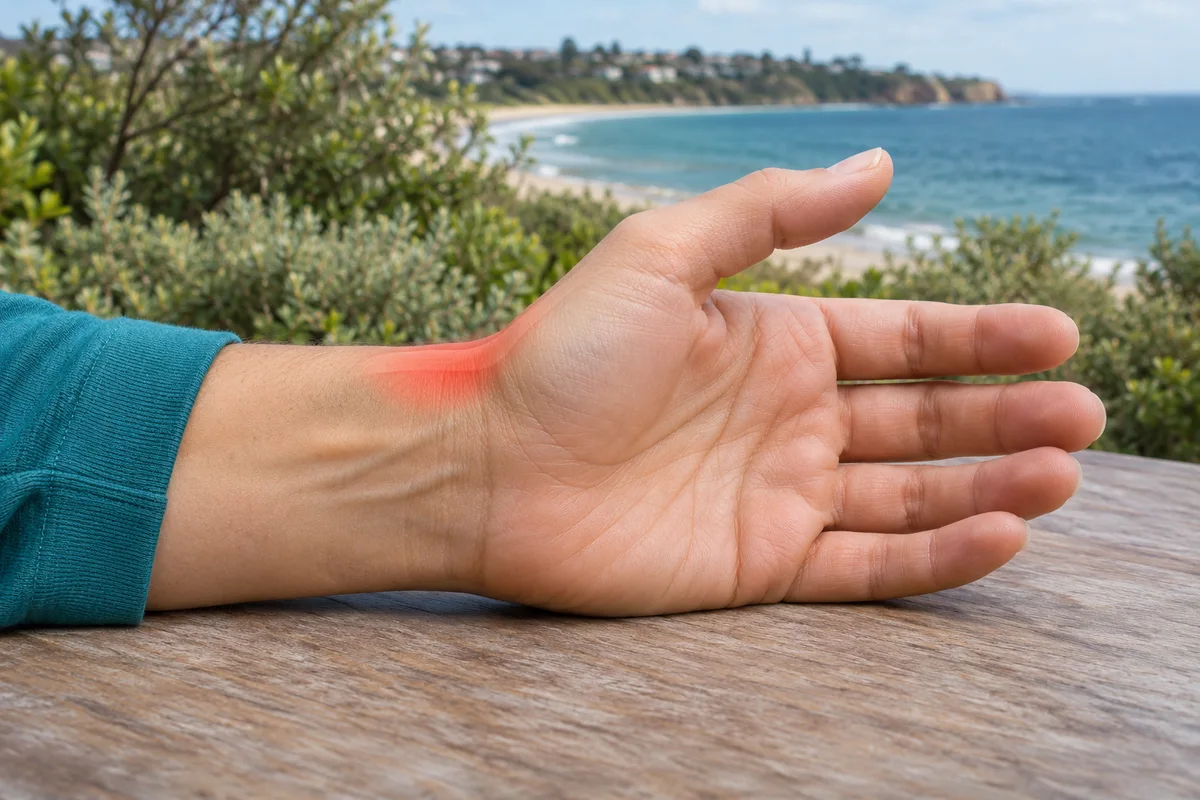
Thumb-side wrist pain with lifting or gripping
The condition involves tendons that move the thumb as they pass through a tunnel near the thumb-side wrist bone. Pain or local swelling may be noticed with thumb movement, gripping or lifting. It can occur around pregnancy and early parenting, but affects other adults too. Thumb-base arthritis, an injury or other wrist conditions can cause nearby pain, so location alone is not enough for diagnosis.
Assessing your wrist and daily tasks
Ash will ask which movements hurt, when the symptoms began and whether a particular work or home task has changed. Assessment may include thumb and wrist movement, local tenderness and carefully chosen hand tasks. Mention a fall, numbness or weakness. Bring any existing reports. If medical assessment, specialist hand therapy or a discussion of injection or surgical options would be more suitable, Ash can explain that pathway.
Making hand use more manageable
- Reduce repeated irritation. Change the way you lift, grip or use tools where possible. Sharing a load between both hands or changing a handle may make an essential task more manageable.
- Choose appropriate support and movement. A suitable support or selected movement exercises may be considered after assessment. A support should fit comfortably and should not cause tingling or colour change.
- Rebuild hand use and review progress. Progress tasks and exercises according to the response. Persistent symptoms should prompt a review of the diagnosis and treatment options rather than increasingly forceful stretching.
Common questions
Is this the same as arthritis at the base of the thumb?
No. They involve different structures, although pain can be felt close together. An examination helps distinguish tendon irritation from joint or other wrist concerns.
Should I keep testing it by bending my thumb into my palm?
Repeatedly provoking a painful self-test is not a rehabilitation plan. Explain the movements that bring symptoms on and avoid forceful testing.
Can physiotherapy settle every case?
No. Some people need medical or specialist hand assessment. The best option depends on severity, duration, function and response to initial care.
Related care and advice
Clinical references and further reading
- British Society for Surgery of the Hand — De Quervain’s syndrome
- Medway Community Healthcare NHS — De Quervain’s tenosynovitis
General information, not a diagnosis or an individual treatment plan. Your assessment guides advice for your symptoms and goals.
Care with Ash
What to expect at your appointment
Start with what’s been happening and what you want to get back to. Ash will discuss your symptoms, assess relevant movement and explain suitable next steps. Treatment and exercises depend on your assessment and preferences.
Fees, what to bring and your first visit ↗