
Shin splints and running-related shin pain
Running physiotherapy · Frankston
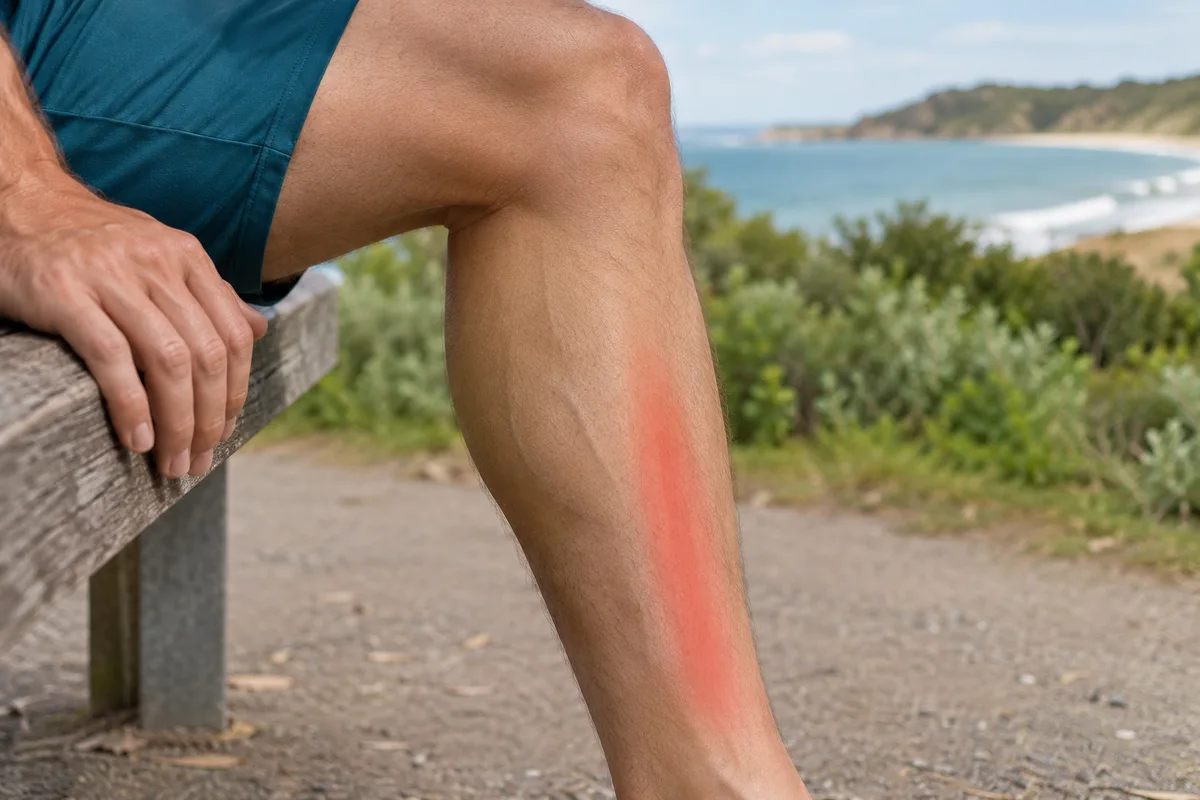
Shin pain often appears after increasing running, jumping or time on your feet. The term shin splints is commonly used for medial tibial stress syndrome, but not every sore shin is the same problem. Ash can assess the pattern, review recent training changes and help decide whether a medical assessment is needed.
- Typical concern
- Pain along the inner shin
- Your assessment
- Training changes and leg capacity
- The aim
- Return to running in stages
Shin splints or another cause of shin pain?
Medial tibial stress syndrome typically involves a broader tender area along the inner shin with impact activity.
Symptoms may initially ease during a session and return afterwards. Pain becoming more localised, appearing with walking or continuing at rest needs closer review because bone stress injury can overlap with an apparently simple running complaint.
Reviewing your shin pain and running load
Bring a picture of your recent training: weekly sessions, distances, surfaces, speed work and recovery. Ash may examine the painful area and assess calf capacity, ankle movement, leg strength and running tasks when suitable.
Footwear history, previous injuries and changes in general activity can help explain the current load. Testing should not require repeatedly provoking suspected bone pain.
A gradual return to impact activity
- Reduce the impact that aggravates symptoms. Temporarily change running or jumping volume and discuss alternatives that are appropriate to the suspected cause.
- Develop lower-leg capacity. Progress calf and supporting leg strength with a load matched to your assessment. Running technique changes are considered only where relevant.
- Reintroduce running gradually. Use a staged plan with recovery between impact sessions and review the response afterwards. Avoid increasing distance, speed and frequency all at once.
Common questions
Can I run if the pain warms up?
Warming up is not reliable permission to continue. The location, severity and response after exercise matter, particularly if symptoms are becoming more persistent.
Are shin splints the same as a stress fracture?
No. They are different presentations, although both can involve excessive bone loading. A suspected bone stress injury may need imaging and a different protection plan.
Do I need new shoes or orthotics?
There is no single footwear solution for everyone. Assessment should consider training and physical capacity alongside shoe comfort and suitability.
Related care and advice
Clinical references and further reading
This page provides general information. Your assessment guides advice for your own symptoms and goals.
Care with Ash
What to expect at your appointment
Start with what’s been happening and what you want to get back to. Ash will discuss your symptoms, assess relevant movement and explain suitable next steps. Treatment and exercises depend on your assessment and preferences.
Fees, what to bring and your first visit ↗