
Bone stress injuries and stress fractures in runners
Running physiotherapy · Frankston
A persistent sore spot in the shin, foot or hip should not always be treated as a tight muscle. Bone stress injuries occur when repeated loading exceeds the bone’s ability to recover. Suspected injuries need timely assessment and sometimes imaging. Ash can help identify concerns and support rehabilitation alongside appropriate medical care.
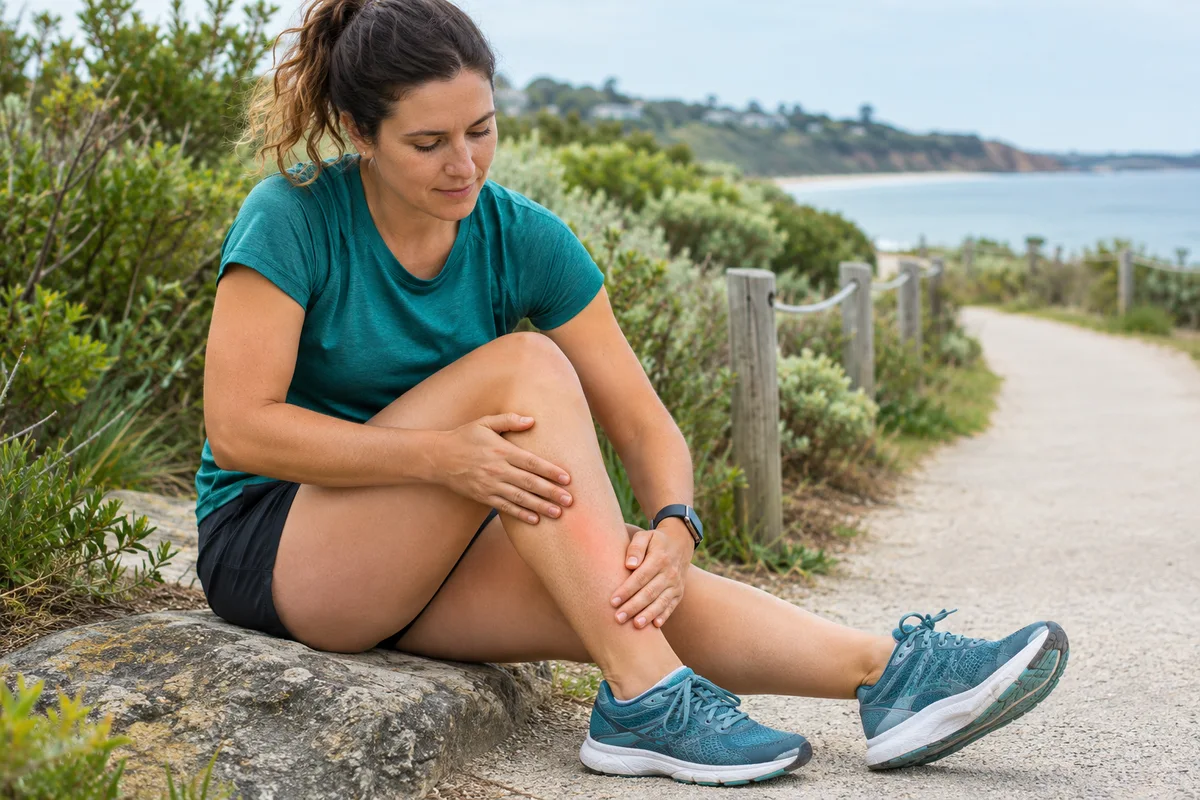
- Typical concern
- Persistent focal bone pain
- Your assessment
- Injury site, training and bone health
- The aim
- A medically guided return to impact
When running pain may involve the bone
Bone stress injury is a spectrum from a stress reaction to a stress fracture. Pain may start with impact activity and later affect walking or continue at rest.
Some sites, including the hip, need particularly prompt medical review. Symptoms alone cannot reliably establish the location or severity, and an early normal X-ray does not always exclude an injury.
Assessment and medical investigation
The history includes the precise pain location, training changes, previous stress injuries, recovery, nutrition and other bone-health factors. Ash may assess walking and relevant movement without repeatedly loading a suspected injury.
A GP or sports physician may arrange imaging and review bone health. Menstrual changes or inadequate energy intake should be discussed sensitively with the appropriate clinician.
Protection before a return to impact
- Protect the suspected injury. Stop the provoking impact activity and obtain a medical plan. Some injuries require restricted weight-bearing or a boot, depending on the site and severity.
- Maintain suitable capacity. Only use cross-training and strength work that fit the medical restrictions. Pain-free exercise is not automatically safe for every high-risk injury.
- Reintroduce impact after clearance. Build a staged return to walking and running when clinical criteria allow, reviewing recovery between sessions and the factors that contributed to overload.
Common questions
Can I run through it if it is only mild?
Do not use pain tolerance as clearance. Continuing impact activity can worsen a bone stress injury. Seek assessment when bone pain is suspected.
Will an X-ray show it?
An early X-ray may not show a stress injury. The treating clinician decides whether further imaging is needed from the history, site and examination.
Is there a standard recovery time?
No. Site, severity, bone health and healing response change the plan. Higher-risk injuries need a more cautious pathway and medical oversight.
Related care and advice
Clinical references and further reading
- AAOS OrthoInfo — Bone stress injuries and stress fractures
- American Orthopaedic Society for Sports Medicine — Stress fractures
This page provides general information. Your assessment guides advice for your own symptoms and goals.
Care with Ash
What to expect at your appointment
Start with what’s been happening and what you want to get back to. Ash will discuss your symptoms, assess relevant movement and explain suitable next steps. Treatment and exercises depend on your assessment and preferences.
Fees, what to bring and your first visit ↗