
Quadriceps strains and front-thigh pain
Sports physiotherapy · Frankston
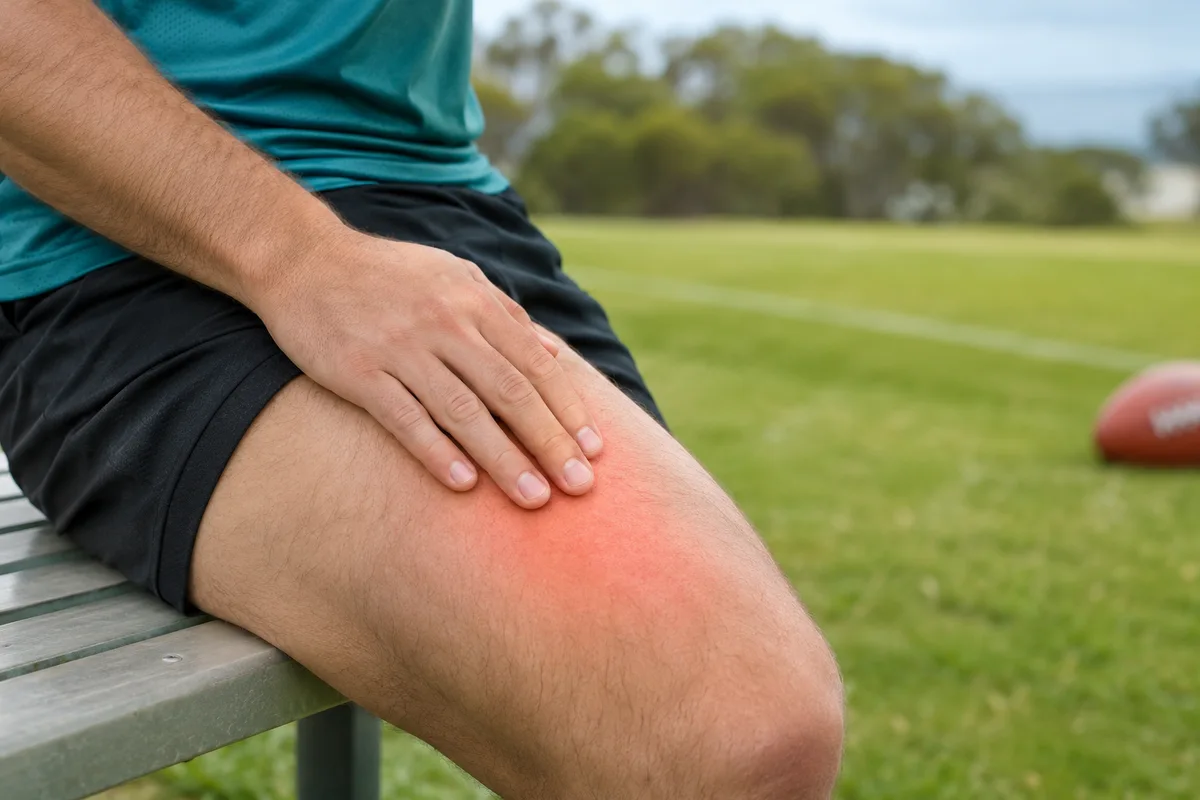
A sudden pain at the front of the thigh during a kick, sprint or acceleration may involve the quadriceps muscles. These muscles help straighten the knee and manage demanding sporting movements. Ash can assess the suspected injury, explain suitable early activity and help plan a gradual return to training.
- Typical concern
- Front-thigh pain after sport
- Your assessment
- Movement, strength and injury severity
- The aim
- Return to training progressively
Front-thigh strain or a different injury?
A strain may produce local tenderness, pain with loading, reduced power or bruising that appears later.
A direct blow can cause a thigh contusion, which is a different injury pattern. Pain close to the kneecap with an inability to straighten the knee raises concern for a tendon injury and needs urgent medical assessment.
Assessing a suspected quadriceps strain
Ash will ask whether the pain began during a sprint, kick, stretch or collision and how it affects walking and stairs. Assessment may include hip and knee movement and carefully graded muscle-loading tasks.
Marked weakness, a palpable gap or substantial bruising may change the referral needed. Bring your training schedule so the eventual return plan reflects your sport.
Rebuilding strength, running and kicking
- Match early activity to the injury. Avoid repeated sprint tests, forceful stretching or hard massage over a fresh painful injury. Find an appropriate level of daily movement.
- Restore muscle capacity. Progress quadriceps and supporting leg strength alongside comfortable movement. The challenge should fit the injury stage and response.
- Rebuild speed and kicking demands. Develop running, acceleration and relevant sport skills before returning to full training. Walking comfortably is only one part of readiness.
Common questions
Is a corked thigh the same as a strain?
No. A contusion follows a direct blow, whereas a strain involves muscle injury during loading or lengthening. The early plan can differ.
Can I stretch it out?
Do not force a painful stretch into a fresh injury. Ask which movements are suitable after assessment.
How long until I can play again?
Timing varies with the extent and location of injury and the sport. Strength, running and kicking tolerance help guide progression rather than a fixed date alone.
Related care and advice
Clinical references and further reading
This page provides general information. Your assessment guides advice for your own symptoms and goals.
Care with Ash
What to expect at your appointment
Start with what’s been happening and what you want to get back to. Ash will discuss your symptoms, assess relevant movement and explain suitable next steps. Treatment and exercises depend on your assessment and preferences.
Fees, what to bring and your first visit ↗