Dry needling in physiotherapy: what to expect
Dry needling can be one part of a physiotherapy plan for suitable muscle-related pain or sensitivity. It won’t suit every person or every problem. A proper assessment, clear advice and active rehabilitation still matter.
What dry needling is
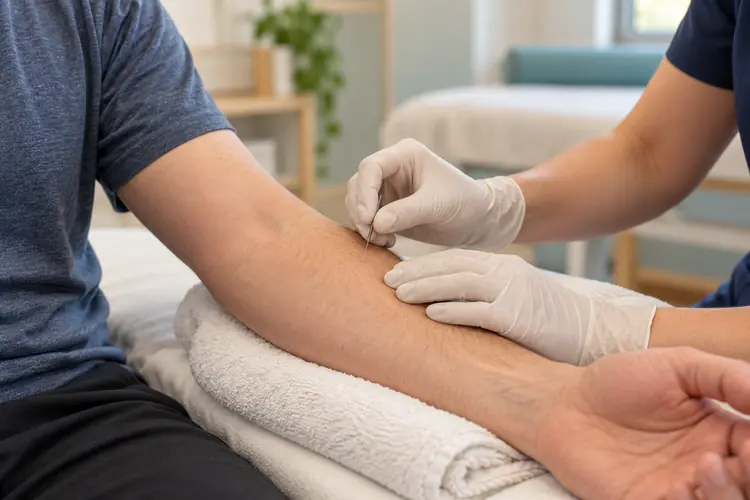
Dry needling uses a fine, sterile, single-use needle inserted through the skin into selected muscle tissue. Nothing is injected. The aim and technique depend on the findings from your physiotherapy assessment.
Dry needling is not acupuncture. Both techniques use fine needles, but dry needling is used within a physiotherapy assessment and treatment plan rather than a Traditional Chinese Medicine framework.
Why assessment comes first
You can request dry needling when you book. Your appointment still includes an assessment to understand the problem, discuss your goals and confirm whether needling is suitable and safe for you.
Your symptoms, health history, medications and previous reactions to needles.
Relevant movement, strength, sensitivity and load tolerance.
Your goals and the activities you want to return to.
Potential benefits, risks, alternatives and your preferences.
A tight muscle doesn’t automatically need dry needling. Ash will explain his thinking, and you can decide whether you’re comfortable with it.
What the technique can feel like
People describe different sensations during and after dry needling. You may notice:
A brief prick as the needle enters the skin.
A short ache, heaviness or muscle twitch.
Temporary soreness afterwards, similar to post-exercise soreness.
Minor bleeding or bruising can occur.
Consent, risks and alternatives
Tell Ash about anything that may affect the decision to use dry needling, including:
Pregnancy, blood-thinning medication, a bleeding condition or a tendency to faint.
Feeling unwell, a skin infection, wound or irritation near the proposed treatment area.
Any previous problem with needling or any concern you want explained.
Rare serious complications can occur, including infection and a collapsed lung (pneumothorax) when needling near the chest. Ash will explain the risks relevant to the proposed area before you decide. Seek urgent medical care for chest pain or breathlessness after needling; call 000 for severe symptoms.
You can decline dry needling or ask for it to stop at any time. Physiotherapy can continue with another suitable approach.
Why dry needling is not the whole plan
Dry needling is not a standalone cure and no outcome is guaranteed. When it is used, it may be combined with other parts of physiotherapy, such as:
Clear explanation and practical self-management advice.
Temporary changes to aggravating activity or training load.
Mobility, strength or graded exercise.
Movement practice relevant to work, daily life or sport.
Hands-on physiotherapy where appropriate.
The right combination depends on your assessment and goals. Ash will check how you’re going and adjust things if needed.
Dry needling in Frankston
Ash, who holds a double degree (Bachelor of Health Science and Master of Physiotherapy), provides physiotherapy at My Therapist Group in Frankston. Dry needling may be considered for suitable muscle-related symptoms affecting areas such as the neck, lower back, jaw or TMJ, shoulder, hip, calf or other sports-related problems.
Learn about the service
For assessment steps, risks, common questions, fees and booking options, see the dedicated Dry Needling Physio Frankston service page.
Loading likes…