
Meniscus injuries and knee pain
A twist on a planted foot, a deep squat or a gradual change in knee symptoms can raise questions about the meniscus. Ash can assess your knee, explain the likely contributors and help you plan rehabilitation or an appropriate medical review.
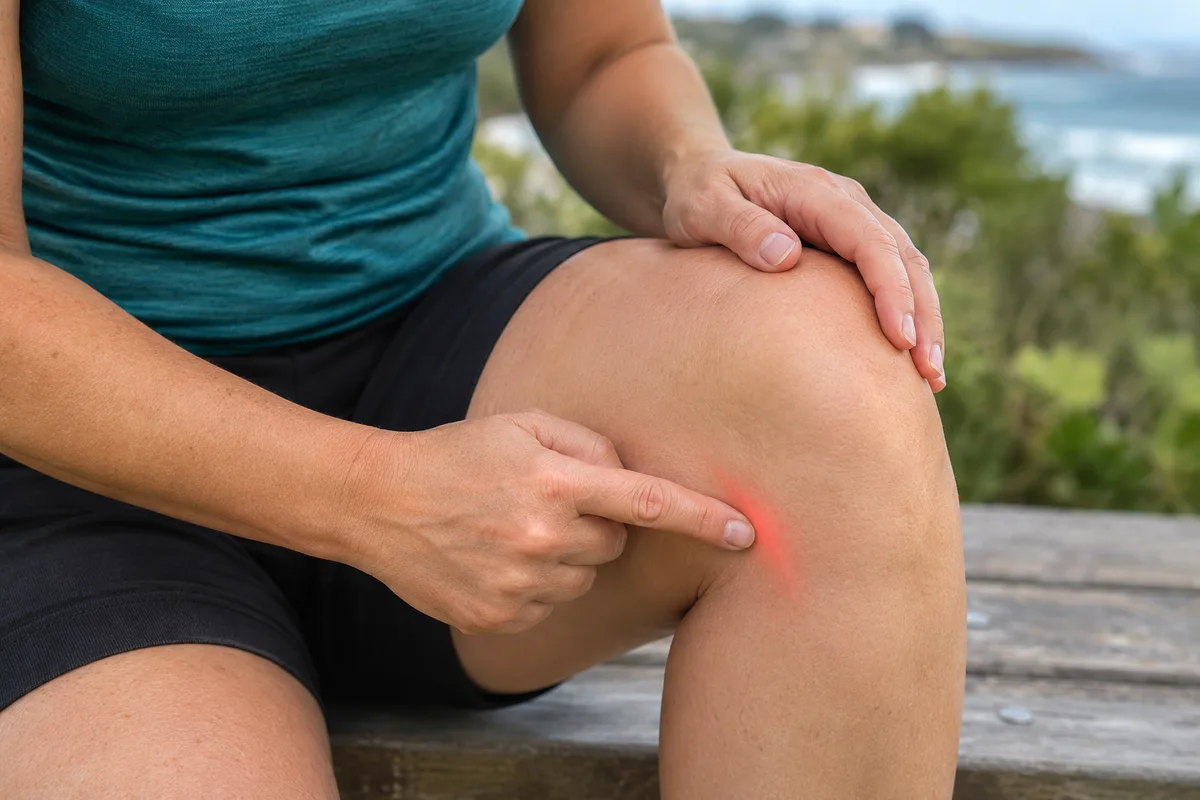
- Typical concern
- Twisting or bending pain
- Your assessment
- Movement, swelling and knee function
- The aim
- Build confidence with daily tasks
Meniscus symptoms: pain, swelling or catching
The menisci are two pads of fibrocartilage between the thigh and shin bones. Symptoms may include joint-line discomfort, swelling, reduced bending or catching.
Some tears follow a clear sporting injury; others develop with age-related changes. Similar symptoms can also come from other knee structures, so it is worth looking at the whole presentation.
Assessing a possible meniscus injury
Your appointment starts with the injury story, swelling, any episodes of locking and the activities you want to recover. Ash may assess movement, strength, walking and suitable knee-loading tasks.
Bring existing reports or a surgeon’s instructions. If the knee is truly locked or the injury suggests a problem requiring early medical care, that takes priority over exercise progression.
Rehabilitation for everyday movement and sport
- Settle the irritated knee. Adjust deep bending, twisting or other tasks that repeatedly flare symptoms while finding manageable daily movement.
- Restore useful strength. Build thigh, hip and calf capacity alongside knee movement. Exercise selection depends on swelling, comfort and the assessment.
- Practise the demands of your activity. Progress stairs, lifting, running or turning in stages. Following a repair, respect the surgeon’s weight-bearing and movement restrictions.
Common questions
Does a meniscus tear always need surgery?
No. Many people start with rehabilitation. A displaced tear, persistent mechanical block or other findings can change the decision, which should be discussed with the treating medical team.
Do I need an MRI before booking?
Not routinely. An assessment helps decide whether imaging would change the plan. Existing imaging is useful context, rather than a substitute for examining the knee.
Is clicking a sign of more damage?
Clicking alone does not establish damage. Explain whether it is painful, accompanied by swelling or associated with an inability to straighten the knee.
Related care and advice
Clinical references and further reading
This page provides general information. Your assessment guides advice for your own symptoms and goals.
Care with Ash
What to expect at your appointment
Start with what’s been happening and what you want to get back to. Ash will discuss your symptoms, assess relevant movement and explain suitable next steps. Treatment and exercises depend on your assessment and preferences.
Fees, what to bring and your first visit ↗