
Golfer’s elbow and inner elbow pain
You do not have to play golf to develop golfer’s elbow. Repeated gripping, lifting, tool use or gym training can make the inner elbow sore. Ash can assess the area, look at the tasks that matter to you and help you build a practical rehabilitation plan with advice that fits daily life.
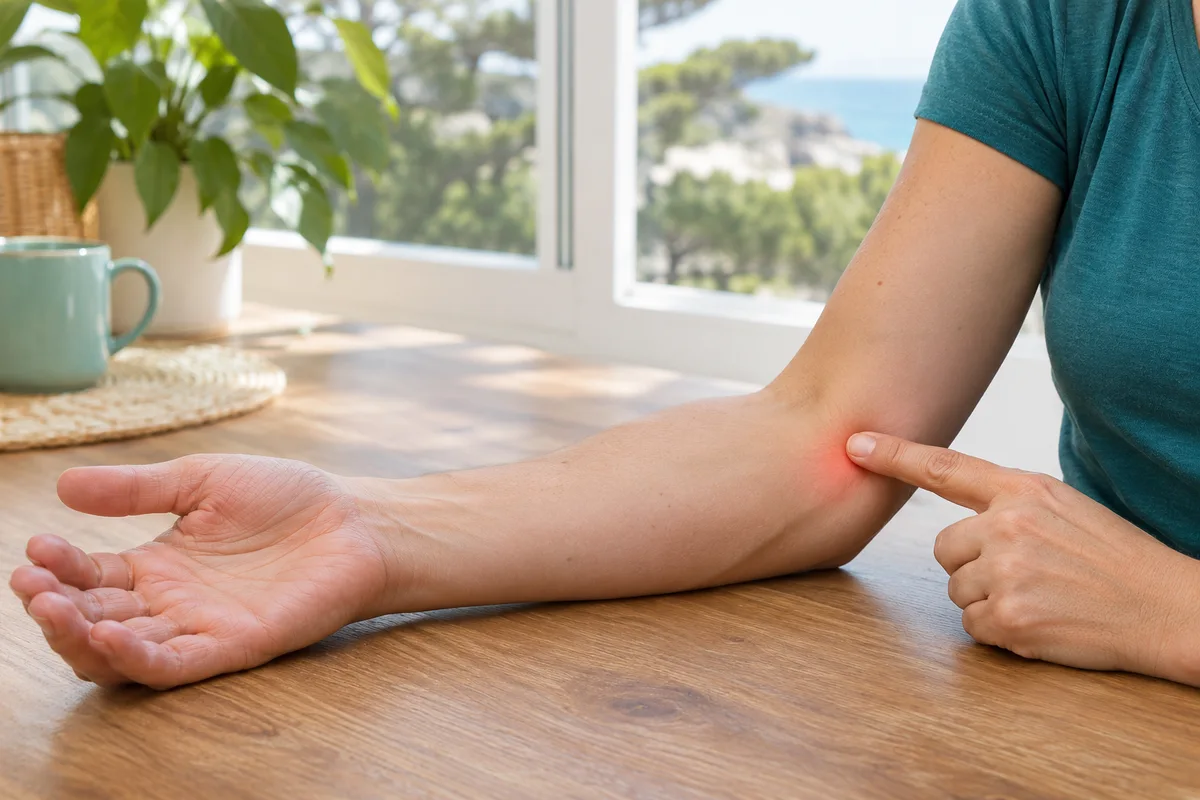
- Typical concern
- Pain on the inner elbow
- Your assessment
- Grip, wrist movement and nerve symptoms
- The aim
- Return to work, gym or golf
Inner elbow pain with gripping or lifting
Golfer’s elbow commonly involves the tendon attachment of the forearm flexor and pronator muscles at the inner elbow. Pain may be noticed with a firm grip, wrist movement or lifting.
This differs from tennis elbow, which is usually felt on the outside. Tingling into the ring or little finger may suggest nerve involvement and needs to be mentioned.
Finding what aggravates your elbow
Your appointment considers when symptoms started, recent changes in work or exercise and whether there is numbness or weakness. Ash may check elbow and wrist movement, grip and suitable resisted tasks.
The shoulder, neck and nerve function can also be relevant. Bring examples of a difficult lift, sport movement or tool task so advice can be specific.
Building tolerance for gripping and lifting
- Adjust repeated overload. Change the amount, grip or position of tasks that repeatedly flare symptoms while retaining manageable use of the arm.
- Progress forearm strength. Build wrist, forearm and gripping capacity with an exercise load matched to your symptoms and examination.
- Prepare for work and sport. Gradually increase the duration and intensity of lifting, tool use or golf practice. Recheck the response later that day and the next day.
Common questions
Should I stop using the arm completely?
Complete rest is not usually the long-term goal for a tendon problem. The useful starting load depends on the severity and the diagnosis.
Will a strap fix it?
A support may change comfort for some activities but is not a substitute for assessment and progressive rehabilitation.
What if I also have pins and needles?
Tell Ash where you feel them and whether they are persistent. Inner-elbow pain can coexist with nerve symptoms, which may require a different plan or medical review.
Related care and advice
Clinical references and further reading
This page provides general information. Your assessment guides advice for your own symptoms and goals.
Care with Ash
What to expect at your appointment
Start with what’s been happening and what you want to get back to. Ash will discuss your symptoms, assess relevant movement and explain suitable next steps. Treatment and exercises depend on your assessment and preferences.
Fees, what to bring and your first visit ↗